Thinking
#08
How do you bring together
the value
that is already there?
— Hokkaido is already a brand
There is a label: "Made in Hokkaido." The moment you see those words in a food aisle, your hand reaches out. No explanation needed. No
proof needed. The name "Hokkaido" itself has become shorthand for quality and trust. This
is no small thing. The brand that companies around the world spend enormous budgets trying to build—Hokkaido already possesses it.
The Numbers Tell Hokkaido's Strength
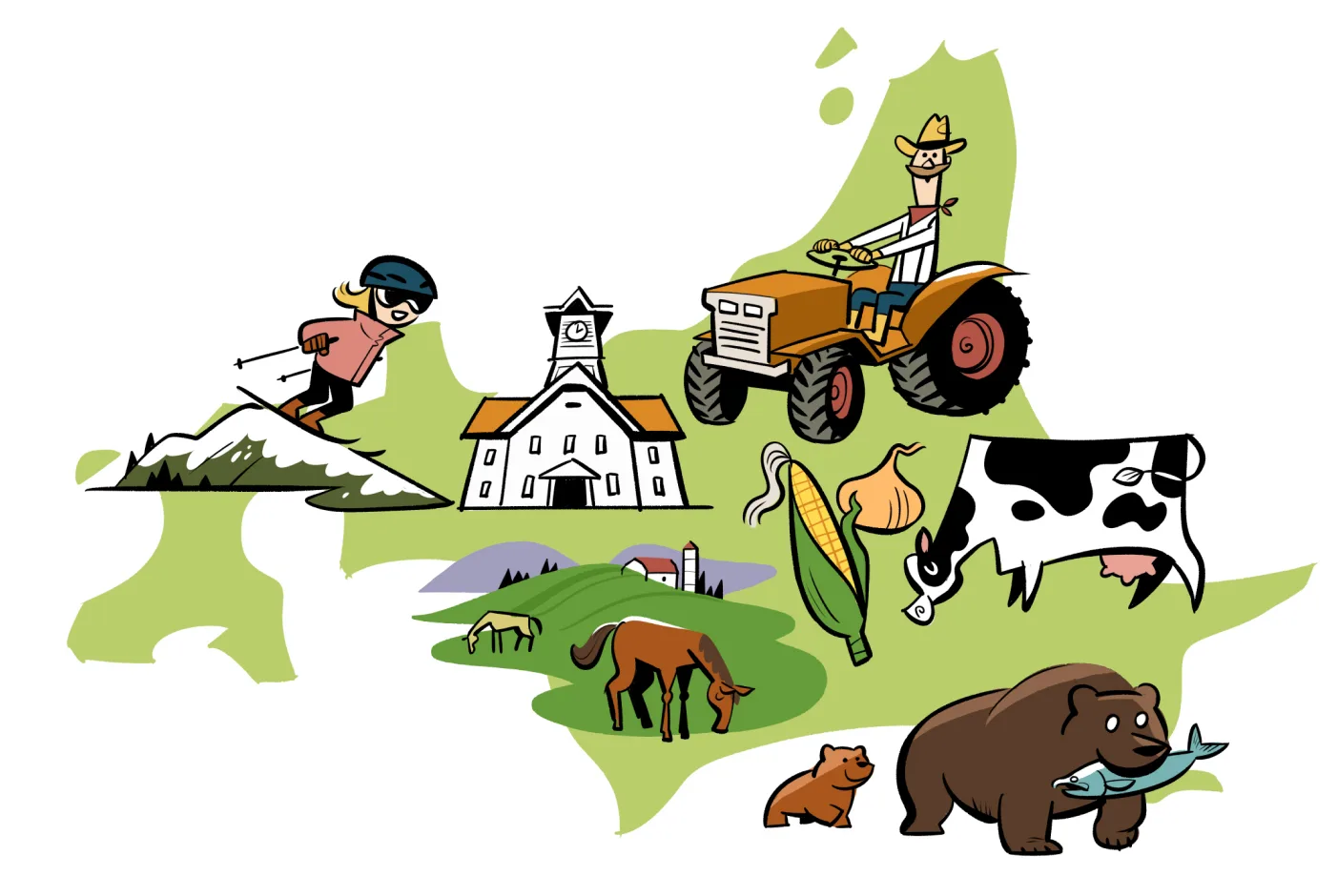
Hokkaido's food self-sufficiency exceeds 200 percent on a calorie basis. Considering that the national average remains below 40 percent, you begin to see how far this land stands apart. It is no exaggeration to say that Hokkaido helps feed Japan. And its strength extends beyond agriculture to fisheries. Scallops, salmon, kombu—the products of Hokkaido's seas are prized in markets around the world. Tourism, too, is one of this land's great assets. Niseko is already known as one of the world's leading ski destinations. The name "Hokkaido" travels abroad without translation. Few regions anywhere possess so many valuable assets at once.
The Trinity of Industry, Culture, and Education
But Hokkaido's true richness lies beyond the numbers. Strong industries draw people. As people gather and put down roots, culture grows: festivals, foodways, ways of living with nature, and an aesthetic particular to this land. These are things built over time—things only Hokkaido possesses. And within that culture, children grow. They come to know abundant nature, the sources of their food, and pride in the land. Those memories help shape the next generation of industries. Industry, culture, and education cannot be separated. If any one is missing, a region cannot sustain itself. Hokkaido's true brand, we believe, lies in the richness of this trinity.
And Yet, Not Bound Together
Still, to be honest, we feel the Hokkaido brand has yet to realize its full potential. Its food is strong—but has "Hokkaido food" become one coherent story? Tourists come—but is the experience designed as something only Hokkaido can offer? Agriculture, fisheries, tourism, culture, education—each is remarkable. But are they bound together as one Hokkaido brand? Beneath the powerful name "Hokkaido," each moves on its own. That fragmentation may be weakening the power of the brand as a whole. This is not criticism. It is a matter of structure.
A Brief for All of Hokkaido Has Yet to Come into View
When the same thing happens in a corporate brand, we first ask: Who are we? Who is putting that answer into words? Who is translating those words into design? Look at Hokkaido through the same lens, and while local authorities and organizations have prepared careful plans, a single brief for Hokkaido as a whole has yet to come into view for us. The assets are already here: industry, culture, nature, and the people who grow up amid them. But however remarkable those assets may be, communication without a brief scatters their force. Without a shared direction, individual efforts do not build into collective momentum. A brand is an accumulation of care. Hokkaido already has what that accumulation requires. What is missing is the framing of the question.
This Is Not Only About Hokkaido
And this is not only about Hokkaido. Many companies and regions hold rich value—a long history, distinctive technology, excellent products, a culture of their own—that has never been bound into one story. The problem is not a lack of material. The question is: How do you bring together the value that is already there? When you feel, "We have good things, but somehow they don't come across," what needs revisiting may be the question that comes before the expression.
Frame the Question, Give It Form
When we think about Hokkaido, we have no wish
to criticize. Quite the opposite. We want Hokkaido's food to reach more of the world. We want its nature and culture to take root in visitors' memories. We want to build systems that keep value circulating within this land, so that the people who work here can take pride in what they do. Above all, we want to pass on to the children growing up on this
rich land a sense of Hokkaido's pride and possibility. What that requires is not making a logo or writing copy first. For whom. For what. What is the real problem. Frame those questions from upstream, conduct the research, define the story, and carry it through to form. Corporate brand strategy and regional brand strategy—the essence is the same. Hokkaido is already a brand.
What remains is how to bind its value together. From there, we want to think—together.